


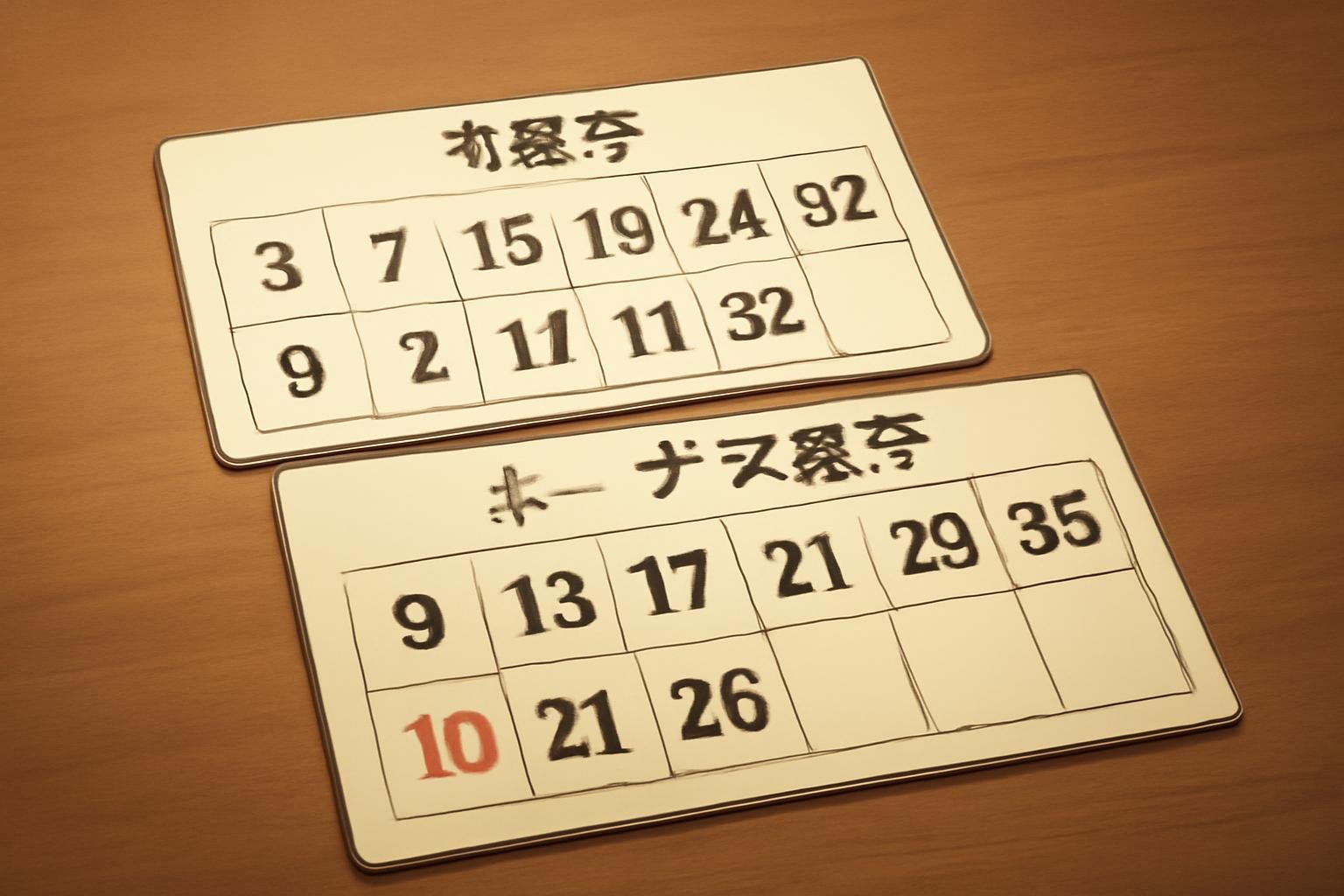
Japan Loto 7 Generators: Seven Selected Numbers and Two Drawn Bonuses
A Japanese Loto 7 results record can show nine numeric values even though an ordinary main selection contains seven. The difference comes from the two bonus values drawn with the result. A generator should preserve that distinction rather than encouraging a reader to select nine main numbers because nine values appear in an archive.
A loto 7 (japan) number generator should identify seven distinct main values from 1 to 37. That is the basic selection format. If the page also illustrates bonus information, it should label it as part of a hypothetical or historical result, not as two additional ordinary choices appended to the selected main set.
Identify the main and bonus labels
Japanese result pages can use 本数字 for the main values and ボーナス数字 for bonus information. An English explanation should retain the distinction even if the original labels are unfamiliar. The number of displayed boxes is not enough to establish which values belong to the selected main line.
A clear record therefore identifies its role first. One record can show the seven selected main values. Another can show a result with seven main values and two bonuses. Keeping them separate makes it possible to learn the match conditions without rewriting a player's selection to resemble a result display.
Validate seven different values
The main selection needs seven distinct members inside the one-to-37 field. A repeated value does not count as another selected member. A generator that removes duplicates must continue until all seven values are present before presenting the line as complete.
This check matters when a tool offers both Loto 6 and Loto 7. The games have different selected counts and field sizes. A familiar Japanese lottery label or similar page design does not establish that the active preset matches the intended product. Read the explicit format before using the output.
Sorting does not create another main line
The seven main values form an unordered set. Sorting makes them easier to compare with a result, but a different arrangement of the same seven members remains the same combination. A saved batch should normalize each main set before checking for repeated complete lines.
The two bonus values, if shown in a result example, should not be sorted into the selected main row. That would mix records with different roles and make later match analysis harder. The original selected set should remain intact while the drawn bonus information stays separately identified.
Bonus conditions belong to specific categories
The two drawn bonuses help define specified lower prize events. They do not become additional requirements for the basic seven-main-number match merely because they are visible beside the result. A generator's explanation should identify the relevant category rather than using a vague statement that more matching numbers is always equivalent.
A practice comparison can count main matches first and then inspect the bonus condition where it matters. This sequence avoids treating a bonus match as though it were another main match. The official current prize definitions determine how the complete outcome is classified.
Preserve context in exported examples
A useful text record includes the game name, seven-number main set and format description. If an example result is exported as well, label its main and bonus portions explicitly. Do not rely solely on colours or a Japanese page layout that may disappear when the content is copied.
For actual participation, the accepted official record determines the draw and selected values. A generator's saved output cannot establish that an entry was submitted. The distinction remains important even if an example later resembles a published result, because a match and accepted participation are different facts.
Keep random appearance in perspective
A valid seven-number set can contain consecutive values or an uneven spread. In a fair draw, each particular valid main set has the same complete-main-match probability. A filter that removes certain patterns is a preference constraint, not evidence that the retained lines predict the next result.
The two bonuses should also remain distinct from each other in a hypothetical result record, because they are drawn as additional values rather than copies of a main winner. A teaching example can deliberately label seven main winners and two separate bonuses, then compare a preserved seven-value selection against it. The exercise is complete only when the reader can explain which shared values are main matches and which satisfy a bonus condition. A total count of familiar labels alone does not preserve that meaning.
Historical draw lists can illustrate the format and the role of the bonuses without making any number overdue. The useful standard for Japan Loto 7 generation is clear product identification, seven valid selected values and a separate explanation of the two drawn bonuses. That makes a compact results display understandable without confusing it with the structure of an ordinary selected line.