


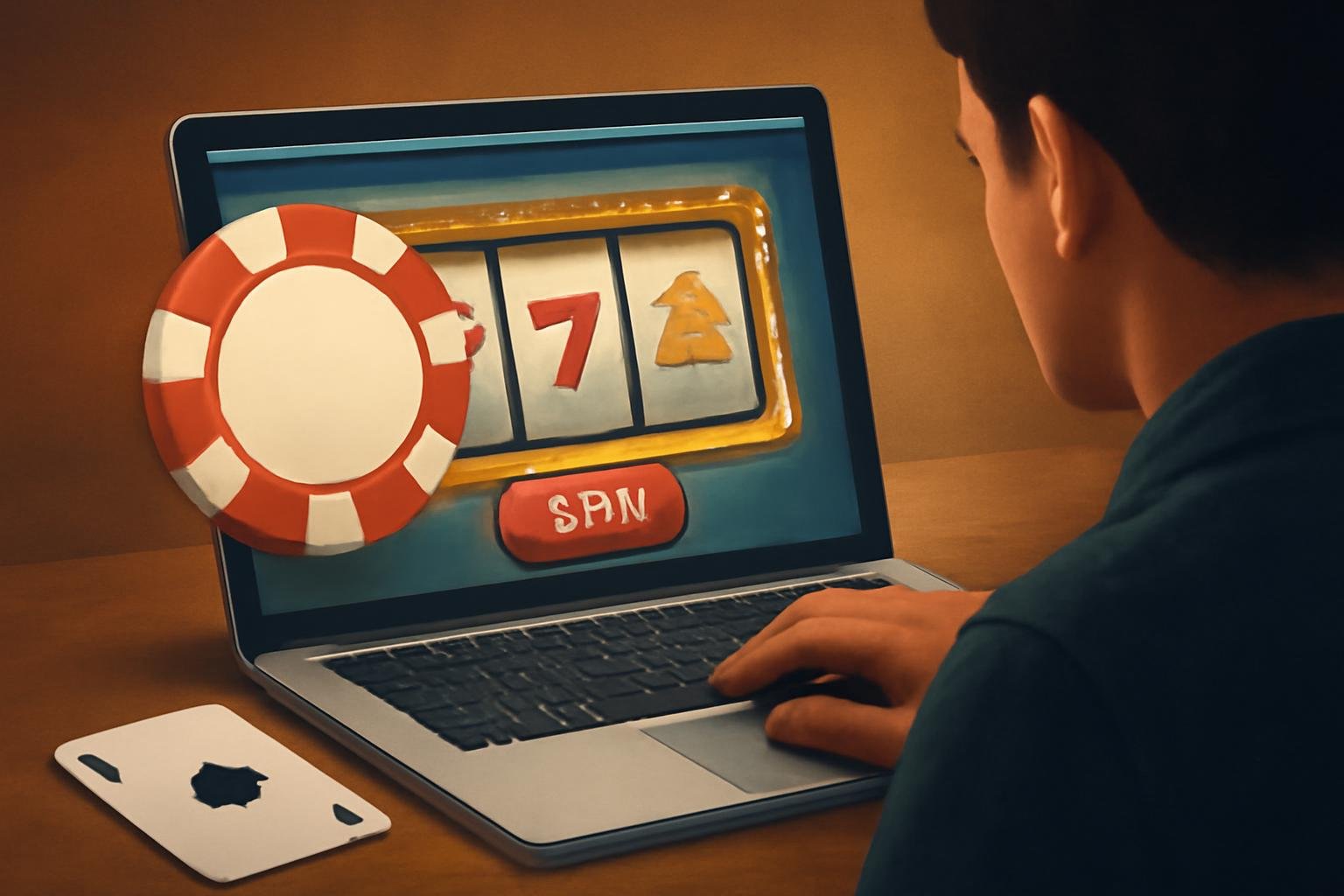
Online Casino Demo Mode: What Free Play Can—and Can’t—Show You
A free-play casino demo is useful for learning how a game works before risking money. It can help you understand controls, rounds and features, but it cannot predict what will happen in a later session or prove that a real-money version is configured identically. Treat demo mode as a practice tool, not a test of whether a game is likely to pay.
What you can learn from a demo
Use a demo to get comfortable with the basic mechanics. In a slot, you can check how to start a spin, adjust a stake or access the paytable. In a table game, you can practise the sequence of decisions and see how the interface presents them. This is especially helpful when a game has unfamiliar controls or several features.
Pay attention to rules and terminology, not just animations. Before playing, look for information explaining winning combinations, special symbols, available actions, and any limits or conditions that apply. A demo can make it easier to follow those details at your own pace. If you are comparing titles, this guide to browsing casino games by type and features offers another way to narrow down what you want to explore.
What a demo cannot tell you
It cannot forecast your next result
A run of wins or losses in free play says nothing dependable about what will happen in a later session. Random outcomes do not become predictable because you have watched a particular sequence, and a demo’s results are not a promise about real-money play. Avoid using a short trial to decide that a game is “due” to pay or that a winning pattern has been discovered.
It cannot demonstrate long-term returns
Some games publish a return-to-player (RTP) figure: a theoretical percentage calculated over a very large number of plays, not a forecast for one person’s session. A short demo cannot verify that figure. Nor does a sequence of demo results establish a game’s house edge or tell you what you will get back. Check the game’s information and applicable terms rather than trying to infer long-run performance from a small sample.
It may not match every real-money setting
Game versions, available stakes, features and other settings can vary. A demo may also use virtual credits, which have no cash value. Before moving from practice to paid play, check the rules and paytable again in the version you intend to use. Do not assume that a feature, stake option or displayed balance works the same way everywhere.
A practical way to test a game
- Read the rules first. Find the paytable or rules screen and note what triggers a win, bonus round or special action.
- Explore the controls. Use free play to learn where settings and information are, rather than to chase a particular result.
- Check the real-money version separately. Confirm its rules, available stakes and any relevant conditions before deciding whether to play.
- Set a limit in advance. If you choose to gamble, decide beforehand how much time and money you are prepared to spend, and stop when you reach either limit.
- Keep the demo separate from your expectations. Do not treat practice results as evidence that a real-money session will follow the same pattern.
If you are trying a slot specifically, a separate guide explains how to choose an online slot. Use such guidance to understand game features, not as a method for finding guaranteed returns. No choice of title removes the possibility of losing money.
If the demo or rules are unclear
Pause rather than guessing. Look for the game’s help or information panel, and contact the operator’s support team if a rule or setting remains ambiguous. It can be useful to know what to look for in casino customer service before relying on support to clarify an issue.
The simplest takeaway: use free play to learn the interface and rules, then verify the real-money version independently. A demo can make a game less confusing, but it cannot make an uncertain outcome predictable.


